HOME / BLOG / how-to GUIDE
How to Dispose of Construction Debris Legally in New Bedford, MA
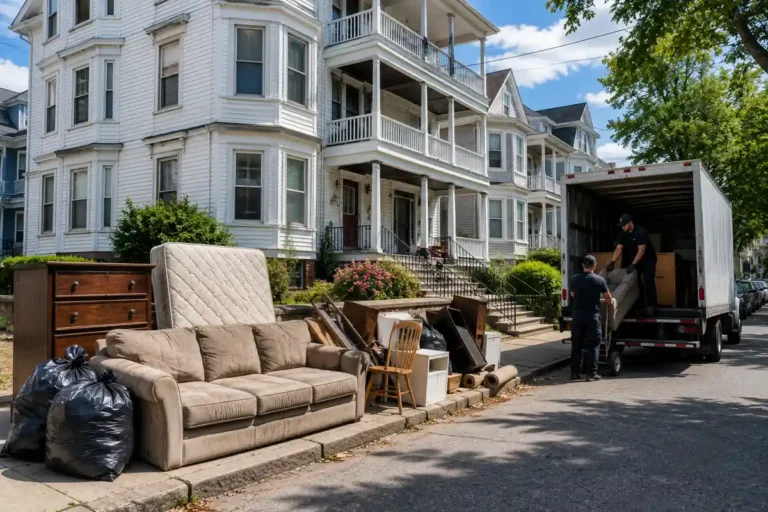
Need it gone today? Call New Bedford Junk Co. for same-day Construction Debris Removal in New Bedford, MA.
Construction debris cannot go in your regular trash in New Bedford. The city does not collect renovation debris at the curb, and the New Bedford Recycling Center does not accept drywall, lumber, rubble, or demolition waste. Massachusetts also bans several common construction materials from landfills under MassDEP regulations.
If you are remodeling a kitchen, gutting a bathroom, replacing flooring, removing roofing shingles, or cleaning out a renovation site, you need a legal disposal plan.
This guide explains:
- What construction debris is banned in Massachusetts
- Where renovation debris can legally go in New Bedford
- Dumpster rental vs junk removal
- Drywall disposal requirements
- Asbestos risks in older New Bedford properties
- Construction debris removal costs in Bristol County
Quick Legal Facts About Construction Debris in Massachusetts
| Material | Allowed in Regular Trash? | Notes |
|---|---|---|
| Drywall / Gypsum | ❌ No | Banned from MA landfills |
| Lumber / Wood Waste | ❌ No | C&D recycling required |
| Concrete / Brick | ❌ No | Must go to approved facility |
| Scrap Metal | ❌ No | Recyclable material |
| Asphalt Pavement | ❌ No | Landfill ban applies |
| Roofing Shingles | ✅ Usually | Heavy disposal fees apply |
| Asbestos Materials | ❌ Special handling only | Licensed abatement required |
Why Construction Debris Is a Problem in New Bedford
New Bedford generates a constant flow of renovation debris.
Triple-deckers get gutted in the South End. Older rental properties are flipped across Acushnet Avenue. Contractors remove plaster, hardwood flooring, cabinets, cast iron radiators, roofing shingles, tile, drywall, and demolition debris every day across Bristol County.
The problem is that most of this material cannot legally go into:
- curbside trash carts
- city dumpsters
- the New Bedford Recycling Center
- regular Massachusetts landfills
A single kitchen or bathroom renovation can create hundreds or thousands of pounds of debris in just a few days.
Many homeowners end up calling a professional junk removal company after realizing the city will not collect renovation debris at the curb.
And if drywall, concrete, lumber, or asbestos-containing materials are handled incorrectly, the fines and cleanup costs can become far more expensive than proper disposal.
Massachusetts Construction Debris Laws You Need to Know
Massachusetts has strict construction and demolition (C&D) waste regulations through MassDEP.
Several common renovation materials are banned from disposal in standard landfills and waste-to-energy facilities, including:
- drywall / gypsum wallboard
- lumber and wood waste
- concrete
- brick
- asphalt pavement
- metal
These bans apply to:
- homeowners
- contractors
- landlords
- property managers
Illegal dumping or improper disposal can result in enforcement actions and fines.
The City of New Bedford also excludes construction debris from its municipal waste collection system. Capitol Waste Services will not collect renovation debris at the curb, and the city’s Recycling Center at 1103 Shawmut Ave does not accept sheetrock, rubble, lumber, or demolition material.
What Construction Debris Is Banned in Massachusetts?
The following materials cannot legally be disposed of through normal trash systems in Massachusetts:
- Drywall / gypsum wallboard
- Lumber and wood waste
- Concrete and brick
- Scrap metal
- Asphalt pavement
- Certain recyclable C&D materials
- Asbestos-containing materials
- Hazardous renovation waste
These materials must go through approved recycling, processing, or disposal channels.
What Can Usually Go in a Mixed C&D Load?
Some renovation materials can still be included inside a legal mixed construction debris load handled by a licensed C&D facility or removal company.
These commonly include:
- ceramic tile
- flooring materials
- cabinets
- insulation
- carpet
- fixtures
- roofing shingles
- demolition debris
- bagged renovation waste
However, drywall and hazardous materials often require separate handling even when mixed debris is accepted.
Is Drywall Illegal to Throw Away in Massachusetts?
Yes. Clean gypsum wallboard is banned from Massachusetts landfills and waste-to-energy facilities.
Drywall must be separated and routed to a compliant recycling or processing facility.
This is one of the biggest mistakes homeowners and inexperienced contractors make during renovation cleanup.
If a junk removal company says they can simply dump mixed drywall loads without separation, that is a red flag.
Professional construction debris removal companies in New Bedford typically:
- separate drywall from mixed loads
- transport gypsum to approved facilities
- handle disposal documentation properly
- comply with MassDEP waste regulations
This matters even more in older New Bedford renovation projects where demolition debris is heavier and more complex than modern construction waste.
Your 4 Legal Options for Construction Debris Disposal in New Bedford
1. Professional Construction Debris Removal
Best for Fast Cleanup and Mixed Debris
For most homeowners, landlords, and contractors in New Bedford, full-service C&D removal is the simplest option.
A removal crew:
- arrives with a truck
- loads debris
- separates materials when necessary
- handles legal disposal
This works especially well for:
- kitchen gut-outs
- bathroom remodels
- flooring tear-outs
- estate cleanouts with renovation debris
- roofing debris
- concrete and tile removal
- multi-floor triple-decker cleanouts
Typical construction debris removal pricing in New Bedford:
- Small load: around $150
- Medium renovation load: $300–$450
- Full truckload: $500–$700
Heavy materials like:
- concrete
- brick
- roofing shingles
- plaster
usually cost more because disposal fees are weight-based.
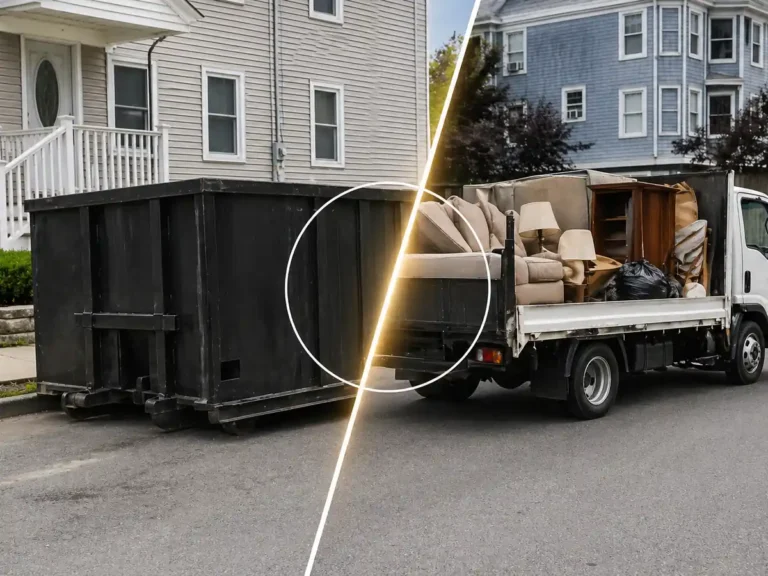
2. Roll-Off Dumpster Rental
Best for Multi-Day Renovation Projects
If your renovation will generate debris over several days, a roll-off dumpster is usually more practical than repeated junk removal pickups.
Dumpster rentals are common for:
- kitchen remodels
- roofing projects
- flooring replacement
- full apartment renovations
- contractor renovation work
Typical container sizes:
- 10-yard dumpster → bathroom or small kitchen demo
- 20-yard dumpster → medium renovation project
- 30-yard dumpster → major structural or multi-unit cleanup
Important:
If the dumpster must sit on a public street in New Bedford, you may need a city permit.
This is especially common in:
- dense neighborhoods
- triple-decker properties
- homes without driveways
- narrow streets with limited parking
Always confirm permit requirements before delivery day.
You should also verify that the dumpster company handles drywall separately to remain compliant with Massachusetts regulations.
3. Self-Hauling to a Licensed C&D Facility
Cheapest Option for Small Loads
If you have a pickup truck or trailer, you can haul construction debris yourself to a licensed Massachusetts C&D facility.
This option works best for:
- small renovation projects
- limited debris volumes
- separated materials
- homeowners comfortable loading debris themselves
Important points:
- Do NOT bring renovation debris to the New Bedford Recycling Center
- Separate drywall before arrival whenever possible
- Call facilities ahead of time to confirm acceptance
- Weight-based tipping fees usually apply
Typical disposal fees range from:
$50–$150+ depending on material type and load weight.
Concrete, asphalt, and brick are significantly heavier than mixed renovation debris and can increase costs quickly.
4. Scrap Metal Recycling
Best for Pipes, Radiators, and Metal Debris
Metal renovation debris should usually be separated from mixed construction waste.
Local scrap recyclers may accept:
- copper pipe
- cast iron radiators
- steel framing
- wiring
- metal fixtures
Some materials even have scrap value.
In older New Bedford homes, contractors frequently recover:
- cast iron
- copper plumbing
- steel radiators
during demolition work.
If you only have a few metal items, including them in a regular construction debris load is usually easier than sorting everything separately.
Asbestos Risks in Older New Bedford Homes
Stop Work Immediately if You Suspect Asbestos
New Bedford has a large inventory of pre-1978 buildings where asbestos-containing materials are common.
Potential asbestos locations include:
- pipe insulation
- floor tiles
- textured ceilings
- siding
- plaster compounds
- insulation materials
Asbestos cannot legally go into standard construction debris loads.
If you suspect asbestos:
- Stop renovation work
- Avoid disturbing the material
- Contact a licensed Massachusetts asbestos inspector
- Use a licensed abatement contractor for removal
You can also contact MassDEP’s Southeast Regional Office in Lakeville at:
(508) 946-2700
Attempting DIY asbestos removal creates serious:
- health risks
- contamination risks
- legal liability
Lead Paint Risks During Renovation
Many New Bedford homes were built before 1978 and may contain lead paint.
Contractors disturbing painted surfaces may need EPA Renovation, Repair and Painting (RRP) certification.
Lead-painted debris can often still go into construction debris loads, but disposal requirements vary depending on the project.
Always confirm handling procedures with your debris removal company or disposal facility before beginning demolition work.
What Construction Debris Removal Costs in New Bedford
| Project Type | Typical Cost |
|---|---|
| Small renovation debris load | ~$150 |
| Bathroom or kitchen gut-out | $300–$450 |
| Full truckload of C&D debris | $500–$700 |
| Heavy concrete or roofing debris | Higher due to weight |
Pricing depends on:
- material type
- weight
- accessibility
- stair carry-outs
- labor
- disposal fees
In New Bedford triple-deckers, second-floor and third-floor debris removal often costs more because crews must navigate narrow stairwells and limited access points.
Illegal Dumping Is a Serious Risk in New Bedford
Construction debris dumping remains a recurring issue across New Bedford.
Illegal dumping commonly happens in:
- vacant lots
- alleyways
- wooded areas
- abandoned properties
The city actively investigates illegal disposal complaints, and fines can become substantial.
Contractors also risk:
- reputation damage
- licensing problems
- project delays
Proper disposal is significantly cheaper than dealing with enforcement penalties or cleanup liability later.
How Construction Debris Removal Usually Works
Typical Cleanup Process
- Identify hazardous materials
- Separate drywall if possible
- Decide between dumpster rental or junk removal
- Confirm legal disposal handling
- Schedule pickup or dumpster delivery
- Remove debris from the property
- Transport materials to licensed facilities
This process helps avoid:
- landfill violations
- illegal dumping
- rejected disposal loads
- unnecessary fees
Frequently Asked Questions
FREE QUOTE
Estate cleanout — handled with care and discretion.
Key CONTACTS
Bristol County Probate Court
441 County St · (508) 992-6631
New Bedford PD (Firearms)
491 Hathaway Rd · (508) 991-6300
Salvation Army (Donations)
619 Purchase St · (508) 997-9133
NB Water Dept (Utilities)
55 N Front St · (508) 991-6140
RELATED POSTS